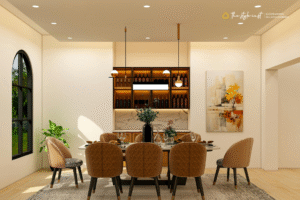
No matter how big the construction is, it doesn’t seem complete without some style and creativity to the dining room. Dining rooms are usually an emotional area filled with different sweet memories of families, friends, special celebrations, and gatherings. On the flip side, any homeowner – looking to sell or make your living space a little more relaxed – will find a plethora of ideas to sleek the look of the dining area, such that potential buyers’ perspective of most of the home changes dramatically. The guide below will help you analyze the tips and techniques employed nowadays for creating a great dining experience with both contemporary appeal and wide market appeal.
Understanding the Importance of Dining Room Home Staging
It is imperative to understand the relevance of home staging the dining room area for the entire marketing perspective in the modern real estate industry. It’s more than just a functional eating area; it encapsulates the core ideals of connection, hospitality, and qualities of life associated with homeownership.
When potential buyers look at an asset, they are in fact seeing their future life unfold amidst those walls—far bigger than merely square footage and finishes. Good dining room staging design aimed at increasing the perceived value of a property by about fifteen to twenty percent. From the professional point of view of real estate agents and interior designers, dining areas, like other living zones, represent a liminal ground between public and private spaces, linking the two. Well-prepared staging in the dining area triggers the idea that the real estate, in general, has been tended to with care and a lasting halo effect spreads throughout the conjectures about other rooms as well.
The psychoefficiency of great dining area staging is to create elegant and u learly working from a sleek table during the day. Your dining area styling ideas should accommodate all these scenarios while keeping a cohesive aesthetic that complements the overall architectural style of your home.
Current Dining Area Styling Trends Shaping Modern Interiors
Sources for education on dining area design make a necessary concern for anyone looking to effectively stage their primary residence or for those updating their dining quarters making them timelessly contemporary. The field of interior design has moved over the years toward places that mix formality with comfort and leave them looking urbane and inviting Among the most noticeable dining area style features is an embrace of organic modernism: the merging of austerity with a little pompousness and adding due hints of the natural.
Home staging with dining supports such as live-edge wood tables, braided natural fiber carpets, and handmade ceramic dishware infused into dining spaces infuse an artistic feel, warmth, and personality without overtaking space. The organic modernist expression caters to a clientele that consists of mildly conscious buyers keenly interested in sustainability and craftsmanship. Dining Room intricate sets blend elegantly with multi-functionality themed ideas.
Since remote work affects the ways people use their homes, the dining room must be versatile in terms of usage during a single day. Currently pushing the envelope are staging approaches to smart-home dining rooms, where subtle signals of such broad-based adaptability are left out in the open–consider a tastefully done laptop snuggled against the side of the sideboard; a stylish table lamp that is just as good for work as it is for food; and an intricately arranged bookshelf giving signs as to what the room is for, to make for both fun eats and fun mental productivity.
In contemporary dining-room staging, the maximalist return proves to be another significant trend, although the maximalist staging might be done with oversaturation or excessive presence for potential buyers. Dining area staging involves a daring wallpaper and sculptural lighting-while a selection of kept decorative objects would be the decorative theme. For maximalist styling, keep in mind: Every element must be tied into a cohesive look by maintaining a similar palette and decoratively placing elements. Biophilic design principles have become equally relevant in the contemporary design scenario within dining spaces.
The concept takes into account the humans’ innate link with nature and includes live plants, optimized natural lighting, and nature-inspired color pallets in the dining areas. While actualizing such creative concepts in the field of dining space styling, the idea of putting a bold fiddle-leaf fig in a corner, hanging potted herbs close to the window, or putting a centerpiece with seasonal branches and flowers-thus bringing the outside indoors to the nook-can be regarded as a definite choice.
Essential Furniture Selection for Dining Room Home Staging
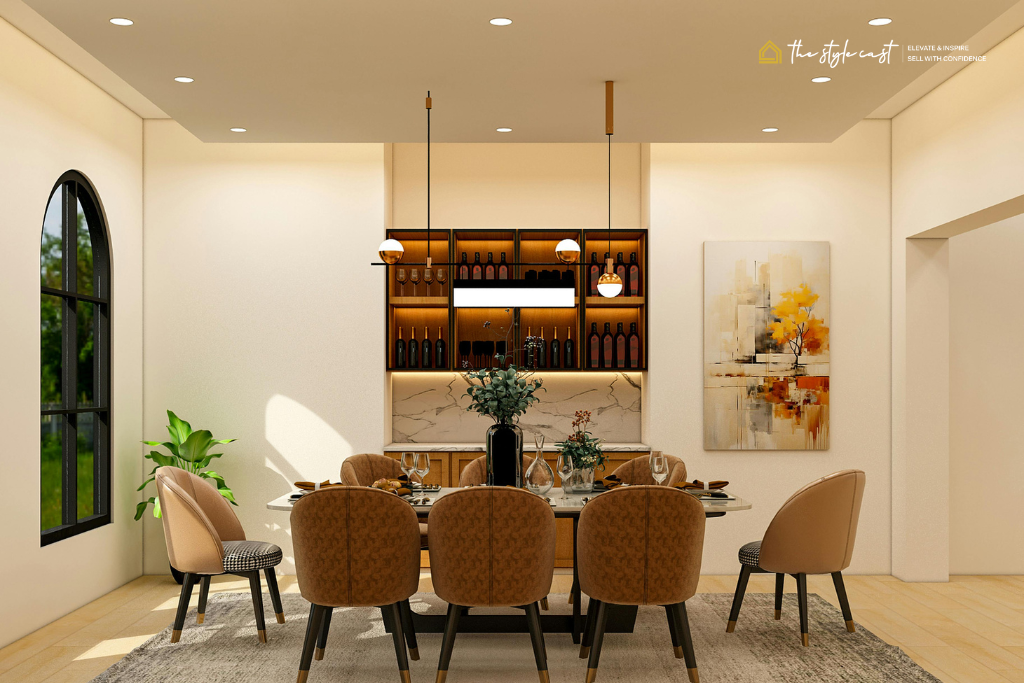
Key to a successful dining room styling strategy is setting up the correct furniture pieces that strike a balance between visual appeal and practical functionality. When it comes to staging dining areas, one could argue that the dining room table should receive the most meticulous attention, as the star area in terms of physical and visual usage and significance. When considering dining room home staging, In most scenarios means that a medium-toned timber table with clean lines will be the most versatile option.
This selection of ideas for a dining area works well because it has the advantage of avoiding the extremely contempo-glass tables or heavily traditional dark wood pieces, as either would fail to appeal to certain buyer demographics. On the other hand, the round or oval table strikes an intimacy-inviting conversation and is a good alternative for smaller dining areas or houses targeted to younger families. However, a rectangular table, on the other hand, is suggestive of formality and exudes elegance, accommodating larger numbers, making it therefore an excellent choice for the more growingly large dining rooms or selling points for those who enjoy entertaining. The dining chairs around your dining table serve as an opportunity to introduce personality and visual interest into your area.
A principal trend in dining room styling would be the mixing of different style chairs and maintaining a cohesive color or material element. For instance, having a set of four unmatching side chairs to be juxtaposed with two different armchairs on the heads of the table establishes an obvious hierarchical order, thus suggesting one level of thoughtful curation over merely throwing together a furniture set. When choosing dining room chairs for home staging, comfort is important, even in areas that purchasers will be occupying only very briefly during a walkthrough. Potential purchasers notice—and most likely appreciate—comfortable seats, even sitting down in the seats to take the dining car for a spin during private viewings.
Upholstered seats plus supportive backs are kind of a luxury with attention to detail regarding upholstery fabrics, another chance to consider juxtaposition with current dining room interior décor. Performance fabrics in neutral colors bespeak underlying elegance, underscored by practical uses—characteristics that appeal to buyers in this day and age who try to resonate with a concise connection when functioning with practicality balanced by external esthetics.
Storage furniture plays an important part of full-house home-staging dining area decor mastery. Carefully styled sideboards, buffets, or credenzas perform triple service: they balance the dining table aesthetically, they provide storage that buyers can easily envision using, and allow for decorative objects that can further enhance the dining area style aesthetic displayed. Size matters a great deal in selecting them, too. The storage furniture purchase should appear weighty to be used- but not so huge that it ends up overwhelming the room or making it feel cramped.
Color Palette Selection for Maximum Appeal in Dining Area Styling Ideas
Color psychology is an essential consideration for successful dining room home staging, because colors evoke particular emotions that either attract or alienate potential buyers. The most effective dining room staging strategies employ color with just a right touch to create certain moods yet remaining broadly appealing to a range of buyer preferences. A neutral color base is the safest and most effective starting point for a dining area home staging project. The softest whites, warm grays, warm beiges, and cool greiges present an elevated backdrop that allows the buyer to picture their belongings in the space.
By ensuring your marketing style grips this air, from a psychological perspective, you allow the small dining area to feel larger, lighter, and more open to broad decor concept ideas. However, it is all about creating neutral dining spaces that would bring that essence of being too sterile or just boring. Here is where the presence of those strategic color accents need to be considered as protagonists in the instance of contemporary dining area styling trends.
Push forward the deeper and richer tones into the scene by choosing accessories, artwork, or a single accent wall that gives it the sense of depth and character. One other lovely fashionable choice that has become a little bit more popular in many a home staging dining room project is the use of navy blues, forest greens, and warm terracottas, for their granny facade that complements both timeless and, paradoxically, contemporary feels. In the entire topic of designing a dining room, the ceiling, as element, almost always remains overlooked .
A light color will help to lighten the space and give it that airy feeling; a darker color brings the high ceiling down to better define space and adds intimacy in the process to some of the cavernous dining quarter. All these are pleasant features that attract a potential buyer to images of warm fires and hearty gatherings. When executing a dining room style based on color, one does think about how the existing natural light impacts the space. It enhances the room’s exposure to the outgoing sun, compensating for cool undertones.
However, anything trending in ever-neutral hues in the south has a cooler preference without being too cold. East-facing dining areas are blessed with the most beautiful morning light, which varies considerably during the day; therefore, your choices of color for home staging dining spaces should harmonize with the pristine morning glow and light falling gently through window in the afternoon.
Lighting Design That Elevates Your Dining Room Home Staging
Lighting is the most important element in arranging dining spaces: perfect dining area styling concept, but is undervalued and worse, shabbily treated in learning-by-trying dining area home staging attempts. (correct the underlined sentence) The light plan when done right could brighten the atmosphere, highlight structural elements, determine main points, and change the place as how potential buyers experience it and remember.
The chandelier or hanging light over your dining table is both a practical necessity and an opportunity to add jewelry to the dining area arrangement. It should be statement-making while not taking over the room, and provide an appropriate scale by balancing visual interest. One of the most common errors home stagers make is compromising the comfort of the dining table with large-oversized fixtures, while smaller options may feel insignificant because the light source in them isn’t enough. In contemporary dining room styling, the preference has veered in favor of fixtures that use a mix of metal and glass, wood and fabric, or brass and marble. Such pairings play up textural interest and visual complexity.
To hang your eye-catching light fixture, you have to place it at about 30 to 36 inches above the table surface. When it comes to lighting and visual proportioning, this height gives ample allowance for centerpieces, sight lines, and the visual ability of the fixture. Layering in lighting is a sophisticated technique used for staging dining areas that signals good design knowledge and meticulous attention to detail. Additional background lighting that can go a long way in enhancing the theme may be incorporated from the softly light-bearing wall sconces, buffet lamps, or strategically placed floor lamps softening shadows and adding instant warmth during evening showings.
Among the ideal styling ideas for dining areas come dimmable lights, which allow you to change light intensity for showing moments and come up with that warm glow that can transform spaces into warm zones instantly. Natural light management is another essential part of dining room home staging. If your dining area had windows, treat them thoughtfully with window coverings that give privacy and controlled light but allow scattered natural sunlight. Sheer curtains in light neutral tones are highly recommended for many dining area styling solutions since they soften harsh sunlight while providing that bright, airy feeling that buyers always want the most.
Accent lighting provides a finishing touch to sophisticated dining room home staging: installing picture lights over artwork, strip LED lights within display cabinets, or small spotlights can illuminate architectural details like crown molding or a beautiful built-in hutch. This subtle layering of light adds depth and dimension for the cameras and a sense that the space is professionally designed.
Creating the Perfect Dining Table Centerpiece in Your Staging Strategy
The centerpiece, ready to bestow all its attention in this tiny elbow room wholly dedicated to ideas of dining area styling, is the moment for great wowing and immediate setting of the tone of aesthetics in the room from that first glance. In effect, dining room home staging very much respects the fact that buyers fetch their firsthand impressions within seconds of stepping into the habitat; and, in the prospect, the centerpiece will therefore pin down the very basis of those golden first impressions.
Areas of dining-room home staging find that the mainstay, in the selection of centerpieces, can be very successfully undertaken through scale and proportion. For an item to do so, the centerpiece quite simply has to compel admiration for its attention to the craft. So, it shall be large enough without getting in the way of the sightline down the length of the table; that is, large enough to keep the table stable but not too large as to make the surface look crowded. Another useful guideline would have you err on the side of the single correct being; a hand span might be a comfortable distance for visuals occupying almost a third of the table in width, and if that would invite a comfortable distance for conversation across the table, then it is something good to work with.
Present day dining area tasteful fads often incline towards an organic and somewhat casual style of central arrangement rather than a centrally symmetrical one. This would include an assortment of candles with varying heights and complemenatry gloss finishes, a small serving bowl joined with a complementaing fruit in its season, or a small combined collection of sculptural items set out in a way that does not spell out design intentions overmuch.
Fresh flowers, foliage, or potted herbs bring a much welcome dose of promise of life and joy while suggesting that the person of the house finds pleasure in beauty in everyday moments. Dining room decoration and home staging on your property should take on a seasonal aspect according to the time of year for sale. Tulips or cherry blossoms lend spring listings an instant lift, while bright citrus or succulent displays stand out in summer; small pumpkins over a bed of pumpkin leaves create the mood for autumn, and a winter home must have its arrangements of botanical materials like evergreen branches and pinecones to provide hints of warmth in each corner.
These small touches in your dining area styling ideas allow potential customers to see on a more emotional level how ownership in various seasons of the year can be a wonderful experience. A well-chosen centerpiece color might either fit well with or provide a controlled contrast towards the tone strategies of your general home staging process.
If the dining room itself has pure, cool, and neutral lights, we will draw in a contrast with the use of a centerpiece anchored by some warm metallics or rich organic colors. On the other hand, for a dining area blessed with warm tones and resonating warm feelings, introducing some cooler elements via centerpiece serves to refreshingly contrast the other.
Wall Treatments and Artwork Selection for Dining Area Styling Ideas
The walls around your dining room provide significant opportunities for making big dining room styling statements that would otherwise turn an ordinary space to an extraordinary experience. Whether you paint it or put up wallpaper, go for some wainscotting or other treatments, the walls soar around the dining experience as a constant aesthetic influence to the overall beauty of the dining space.
Paint stays the most apparent and versatile route for staging a dining-room home, letting almost anything be expressed while entirely circumscribed by discretion for the buyer. Exercise the double-tone wall treatment as a valid dining room decorating trend where the lower walls are being dipped in some deep, dark color while the upper reaches are mantled in some of the more soft-lit and mellow shades.
This treatment allows increased designing interest in dining rooms’ builder’s basic style, along with the illusion of texture and height. Wallpaper in dining areas has surged in favor as far as contemporary ideas, so surpassing previous conceptions of a bland pattern that over-protective designers might have maintained. The wallpaper that is now on offer boasts intricate textures with minute prints and artistic motifs aiming to instill distinct personalities to these spaces while not detracting from space’s serenity.
The best use of wallpaper when it comes to home-staging the dining room is in confined spaces where it can provide for much needed highlights. Specifically for the dining area, a single accent wall should suffice, invariably facing the most prominent feature of the room-lo and behold, the center of attraction! Grasscloth wallpapers, see, are trendy in the dining area styling area, which slyly sells its organic texture to the potential buyer. Subtle motifs breathe complexity and approachable design to the homeowner without pushing too hard. Grasscloth’s subtle variations come together for a natural depth and sophistication that may or may not be completely apparent to the camera but is a crucial design element buyers become infatuated with.
Choosing artwork can be a double-edged sword for staging a dining room in the home. Appropriate art assists with the staging of ideas for the dining area by adding personality, color, and cultural style, while inappropriate art might irritate, offend, or simply fail to resonate with potential buyers. Abstract paintings based on complementary color palettes are the safest choices because they provide an eye-catching diversion from potentially polarizing subject matters. Gallery walls are being increasingly preferred for home staging in dining area strategies, especially in long walls of uninterrupted spans that might look boring or empty otherwise.
When creating wall gallery toward dining room styling ideas, keep frame colors constant, and mat treatments even when the styles of the art escape the variation, making constant repetition be the only criterion for visual continuity. Position them on the floor before putting them on the wall so that they can all fit together-pair according to matching, then hand-paint before hanging so that the whole thing composedly hangs in precise balance.
Mirrors can be a great choice as a modern solution for the paramount area of the dining room, in-between or in addition to wall treatments. A spacious mirror opens opposite a window to a scattering of natural light and a feel of extra expansive space–great attitudes to keep in mind for dining styles. Hand-painted mirrors can be made for nice wall hangings reminiscent of Versailles reflecting chairs. They each embrace natural light and present a scenic episode throughout the dining room.
Flooring Considerations and Area Rug Selection for Dining Room Home Staging
The floor under your diner furniture has an immediate effect on the success of the dining room styling ideas. It anchors the set for all the other style elements while adding its own aesthetic and textural quality. Whether you are working with your existing floor or preparing the stage for your dining area makeover as part of your deep-stage culinary love affair on the dining table, it is crucial to understand the meaning of different floor types and treatments to the buyer perception. In the domain of dining room home staging, hardwood is still the gold standard, the one thing that puts Amy Weinhouse on top of the buyer preference surveys and makes a home worth more monetarily, but if your dining area is sporting hardwood floors, make sure they are cleaned, fixed, and refinished properly before any other styling ideas are considered.
Scratched, stained, and environmentally challenged finishes erode the view of the best of dining table decorations and make buyers worry about the deferred maintenance. Area rugs are the best concept for less attractive floorings-i.e., old tiles, worn out carpets, and damaged laminates. To fit with the dining room remodeling trends, this approach works nicely and falls within most budgets. Those well-settled living-room-sized rugs can change the room, define a dining space, add warm textures, draw the eye away from the undesirable floor, and showcase your stylized assortments. A major factor for active home staging is the rug size.
Most go wrong on the front by bringing in the small ones which make the zone feel disjointed, instead of the required cohesiveness and spaciousness. Your dining setting rug should be at least two feet larger than each side of the table, so that when dining chairs are pulled out, their feet remain securely on the rug. When done right, the scale creates harmony. It is not only in the periphery but a genuine show of consideration from the designer. Natural fiber rugs are has been identified as reasonable options in contemporary styles for dining rooms comprising its texture, strong consistency, and neutral shades that would go with all decor styles.
Jute rugs, sisal rugs, and seagrass rugs would create ambiance warmth about it and maintain the illumination that appeals to modern purchasers. It is a kind of forward-thinking to try and place another type of floor covering-a more decorative rug-over the larger natural fiber rug in an expansive dining room’s design that says the same practical function of play. 参 Considerations of dining area rugs in your dining room home staging strategy should aim not to compete with other design elements but, on the contrary, to provide harmony with them.
In case your dining chairs feature pattern upholsteries or walls carry busy wallpaper designs, go for a subtle rug contrast that combines the texture needed, rather than acting as an additional visual competition element. However, in the minimalist dining areas where walls are neutral and furniture colors are monotonous, it is an essentially critical finishing point for a thoughtful eye-catching rug design to be implemented in its dining room styling with minimalism.The floor under your diner furniture has an immediate effect on the success of the dining room styling ideas. It anchors the set for all the other style elements while adding its own aesthetic and textural quality.
Whether you are working with your existing floor or preparing the stage for your dining area makeover as part of your deep-stage culinary love affair on the dining table, it is crucial to understand the meaning of different floor types and treatments to the buyer perception. In the domain of dining room home staging, hardwood is still the gold standard, the one thing that puts Amy Weinhouse on top of the buyer preference surveys and makes a home worth more monetarily, but if your dining area is sporting hardwood floors, make sure they are cleaned, fixed, and refinished properly before any other styling ideas are considered.
Scratched, stained, and environmentally challenged finishes erode the view of the best of dining table decorations and make buyers worry about the deferred maintenance. Area rugs are the best concept for less attractive floorings-i.e., old tiles, worn out carpets, and damaged laminates. To fit with the dining room remodeling trends, this approach works nicely and falls within most budgets. Those well-settled living-room-sized rugs can change the room, define a dining space, add warm textures, draw the eye away from the undesirable floor, and showcase your stylized assortments. A major factor for active home staging is the rug size.
Most go wrong on the front by bringing in the small ones which make the zone feel disjointed, instead of the required cohesiveness and spaciousness. Your dining setting rug should be at least two feet larger than each side of the table, so that when dining chairs are pulled out, their feet remain securely on the rug. When done right, the scale creates harmony. It is not only in the periphery but a genuine show of consideration from the designer.
Natural fiber rugs are has been identified as reasonable options in contemporary styles for dining rooms comprising its texture, strong consistency, and neutral shades that would go with all decor styles. Jute rugs, sisal rugs, and seagrass rugs would create ambiance warmth about it and maintain the illumination that appeals to modern purchasers. It is a kind of forward-thinking to try and place another type of floor covering-a more decorative rug-over the larger natural fiber rug in an expansive dining room’s design that says the same practical function of play.
Considerations of dining area rugs in your dining room home staging strategy should aim not to compete with other design elements but, on the contrary, to provide harmony with them. In case your dining chairs feature pattern upholsteries or walls carry busy wallpaper designs, go for a subtle rug contrast that combines the texture needed, rather than acting as an additional visual competition element. However, in the minimalist dining areas where walls are neutral and furniture colors are monotonous, it is an essentially critical finishing point for a thoughtful eye-catching rug design to be implemented in its dining room styling with minimalism.
Window Treatment Strategies for Home Staging Dining Area Spaces
Wherever there are windows in your dining area and there windows, too, are doubleheaded opportunities and challenges that should be considered throughout the plethora of dining space ideas—they offer invaluable natural light and architectural accents while possibly providing less appropriate looks, leaving privacy concerns that should be addressed through deliberate means. The choice of window coverings makes all the difference in the showcase of the brightness, depths, and appeal of the room to come. Light curtains establish the broadest form of appeal for dining room home staging.
The material conveys softness and sophistication without blocking sunlight. Curtain panel designs in a neutral color scheme, in combination with the selected wall colors, should be hung way above the window for an illusion of bigger windows and higher ceilings in your dining settings. Your rods should extend about 4-6 inches on each side of the window box, and fabric panels must dangle from the ceiling to touch within an inch of the floor for that dramatic effect. The theme of sheer curtains categorically belonging to the dining area trends is particularly well-suited if your dining space enjoys lots of natural light or beautiful outdoor scenes.
The lightweight fabric has the capacity to soften strong sunlight, offer a minimum of privacy but still maintain a bright and breezy ambience, as almost all buyers prefer. Using sheers under more heavyweight draping is an indication of the fact that this room can can cater for both the breezy daytimes and the more delicate intimacies that may ensue at night. Roman blinds offer themselves up as a perfect option in styling dining spaces in modern homes: clean lines will appeal to the buyer’s familiarity with modern aesthetics.
These window treatments offer excellent diffusion of light, performing superbly when it comes to security and dusting off from their respective locations, providing that extra cushion so that the views are indeed not obstructed and the influx of external light is maximized. Neutral-coloured or subtly-patterned fabric roman blinds integrate effortlessly into various designs of the dining area. In what may be an upstairs window treatment option or regular architectural renovation, or undoubtedly counted towards resale value, plantation shutters mostly add a classic touch to dining rooms.
While being more expensive than soft post window treatments, they are simply the greatest thing for photography, as light control definitely remains unrivaled with sun shutters, as any discerning buyer might tell. White or cream-colored plantation shutters work splendidly in almost every situation for dining room home staging preferences and offer an air of timelessness that goes beyond the specifics of styles in decorating.
For dining areas with difficult windows—opens to busy roads, has sight of neighboring houses, or where you gaze at a scene you would not want to—design ideas for the dining area has to include balancing the occupants’ requirement of privacy, natural light, and views. The most beautiful solution would be the top-down, bottom-up shades that permit light entry from the upper half but retain the privacy at the level of the eyes. Alternatively, ornamental glass film can be etched, providing partial frost that can be permanent or temporary, letting in the light, but hiding the wearying vista.
Incorporating Plants and Greenery into Dining Area Styling Ideas
Large floor plants make dramatic statements in the dining areas with the scoop for space, often serving as living sculptures anchoring corners or playing with architectural features. Fiddle leaf figs, bird of paradise, and large monstera specimens really make a scene in the current stylings of dining area, offering monumental massing and tropical flair. Such dramatic ones work well in dining rooms with high ceilings or abundant natural light, but need to be placed with care so that big things don’t dwarf smaller spaces leaving no room for breathing.
Plants on a tabletop also allow bringing greenery into your styling diet without having to use up any floor space or sign away in hefty ventures. A batch of small herbs like basil, rosemary, or thyme in plant pots near a kitchen window suggests fresh and wholesome cooking and has something very exclusive that cater to food-conscious buyers. Another somewhat sensual ambiance, they are easy to tuck away decoratively on buffets, sideboards, as well as dining-table centerpieces. Hanging plant accents are increasingly being included in dining room home staging plans, especially in spaces with towering heights or a shortage of floor space. Long trailing pothos, string of pearls, or spider plants suspended from ceiling hooks or attached to walls create vertical interest and soften hard architectural lines.
Dining area style ideas with hang-up plants should ensure that said items are positioned at such a height that they would not intervene in movement or conversation, and that their care is consistent with available light. There are definitely some dining room scenarios that might call for fake plants in home staging, especially if the dining space is a little dark anyway, or the property will be left sitting empty while it goes up on the market.
Artificial plants nowadays have come a long way and, therefore, have very high-quality options that come close to living specimens, putting to shame the great looks that fake imparts. Do not forget to enjoy faux plants as an illusive element of dining area decorations. Make sure you go for the best available products and keep them dust-free and in their most lifelike state. Containers provide a rare opportunity to correlate plant embellishments with eating place decor trends and color palettes.
Ceramic wear with an unglazed finish, a woven basket with a liner plant, or contemporary concrete vase carriers can contribute to your design aesthetic and elevate humble plants into the context of intentional decorative elements. If coordinating certain kinds of plant holders where among the heights are tall, and the rest are short, the clustering of plants does maintain a certain unity, suggesting a deliberate assembly instead of a random collection.
Table Setting Strategies for Dining Room Home Staging Impact
Part of the art of styling a dining area is how you choose to dress your dining table. Should it be left unadorned? Partially set? Or staged with full place settings? Each of these pleads great advantages in its own right as part of the overall home staging aspect for the dining room-meaning it comes down to your specific property, the buyer target, and the impression you wish to create. Totally bare tables take things full circle for a stark, minimalist touch found in some of the latest modern dining style ideas, letting the beauty of a basic wooden table appear, while a few models boast impressive wood grain with an unusual shape or distinctive designs sure to be enjoyed.
However, bare tables can also look cold, hardly ever used, or incomplete; buyers could find it difficult to see purpose and potential in the room. The aesthetic of the bare set-up table adorns the partial-staging technique, looking a lesser like a stage in a theater, or some other dreary concrete slab, reinforced with a beautiful table runner and a sculptural object or a simple, humble bowl. This whole partial setting vies aggressively with minimalist slickness usually put forth throughout breathtaking dining-room backgrounds. You can visualize it as sort of, all is as buff no matter where you see it, just plain, cold, boring blank.
You can’t help yourself imagining an existence with your own dinner parties. The Buyeres always like this very much, the feeling that allows them to cook up what skin-worthy pretty plays in their heads. Partially staging is, to allow for the burstiness of the styling idea, ideally more about imagining the moment itself than it is establishing a set aesthetic. While full place settings will really deliver in a real sense of style to your dining room staging, as you present a complete tableau that gives a very specific story of dining and entertaining in that space, you do well to picture the potential buyer immediately with entertaining dinner parties, special celebrations, or casual, elegant dining in it.
The huge secret to doing full table staging right is to discourage very supertheme or superseasonal displays as they may in the end seem quite limiting. Simplicity and tastes of refined sophistication should guide your choices while implementing full table setting for your dining room styling ideas. White or cream dinnerware always speaks for universal expression and timeless charm, while simple glassware and graceful cutlery say ”quality” without imposing style preferences. Folding origins cloth napkins right beside or on the plate will ensconce your arrangement with a chic panache and not cost much but create a statement. The number of place settings is often of importance but will be determined by the scale of the dining area in home staging efforts.
Usually, four to six place settings suit best for most dining tables, ideally hinting at an intimate buffet without drowning out the table or making the area look cramped. Do not, in any event, endeavor to set out all available seats as this will make the appearance of your table smaller. And likewise, the dining area will set in a constraining tone instead of exposing an entire world of boundless space where design imagination can work.
Add minor touches of styling trends to your dining area which do not stand out due to their distracting nature. A simple bottle of wine hinting at a dinner party, propped with its label facing out, and a small vase of flowers at each place setting to introduce both organic and color elements are a possible direction. Think about the immediate line of sight, loosened entry points into the dining room to ensure staging angels of your table are camera-ready when they enter the primary viewing angle for quick and great impressions.
Styling Sideboards, Buffets, and Credenzas in Your Dining Area
Storage and display furniture pieces in a dining area provide space to demonstrate the functionality and storage capabilities of the room which extends to the entire dining room home staging strategy. Attention to detail is necessary when deciding on how the pieces of furniture will be styled, as included within the larger, comprehensive dining area styling ideas. The tops of buffets and sideboards are horizontal galleries that allow for decorative expression of your ultimate style, giving the room a touch of personality.
When implementing workable approaches for successful aesthetic home staging in the dining area, the space concept of just-threes, objects grouped in odd numbers that keep the eye pleasantly busy and lend equilibrium, can also be put to good use. Consider combining items set to almost the same height, such as branches on a standing vase, a crow bowl of moderate size, and a small piece of art that contributes to depth and inhibits the reign of straight lines all around.
The trays are often organizing elements in classic dining room stylization forms, grouping smaller objects together purposefully while offering an interest of metallic or texture through their element. A brass or mirrored tray with a decanter, glasses and a diminutive plant provides a miniature vignette for the bar. The combination is an easily understood response to potential entertainability without the need to inflict a permanent post.
Thus, the assembled arrangements serve double duty in undergoing home staging food for thought, now more easily allowing buyers firstly to view (if not ever to use) the space and then to appreciate its existing rightful beauteous charm. Open shelves paired with buffets or credenzas require certain levels of styling to appear curated rather than cluttered. The cure with today’s dining area fashioning is: less is more. They mainly prefer to display fewer items, each with its own plane of breathing space, rather than electromaxing every nook and cranny available.
Placing a series of open ladles with a few decorative pieces interspersed betwixt, can be very decorative. Or try superfashioning accessories of lean prints set against the rear wall or else select a few culinary- oriented and colorful- mannered cookbooks. Underneath closed storage cupboards: one must not forget to evaluate these when trying to dress up a dining area even though the buyers are buying blindfolded these cupboards are nevertheless dirty, cluttered, and organized.
Don’t send routed arranged dinner sets, stacking table linens, or lining in box storage as a property that suggests storage that has been previously well-maintained; give them some potential to visualize what their own belongings may look like presented in these spaces. At least one mirror or piece of artwork is hung above the sideboard, creating a distinctive visual interest and drawing the eye upward, thereby making the dining area feel more spacious and cerebral.
Considering such thoughts when planning dining space, one should center these decorative elements above the furniture and pay regard to proportion. Usually, with artwork, it is best to size it to be about two-thirds bit the size of the furniture that is below. With mirrors, actually, it is wise to go slightly bigger so that light bouncing off may be increased.
Addressing Common Dining Area Challenges in Home Staging Projects
Not all dining spaces would be well suited for straightforward dining room home staging operations. Some dwellings would pose specific challenges, necessitating some improvements in the area regarding artistic dining area styling in order to overcome certain looming limitations and make the most attractive effort at the enticement of potential buyers. Knowledge of versatile and suited solutions for these issues elevates the seriousness and effectiveness of the staging approach. Small dining areas tend to stump home stagers the most.
However, they are most common issues in such kinds of home staging projects, especially in metropolitan areas or any bare-floor home arrangements where the dining area is reduced in its physical presence. While trying to manage a good design with a less square footage, dining area styling should be kept simple with light colors, a few stratagem mirrors, and furniture endeavored with the correct scale while still performing its primary function without visually swamping the space. Circular or oval-shaped tables tend to do better in a small dining environment, as they manage to diminish visual bulk and barrier-enhancing square edges, thereby breeding smooth flow around the area.
Awkwardly shaped dining areas, with rooms which have assumed complex sizes or odd angles, or boast some kind of architectural quirk, warrant the fashioning of a dining room which will use these elements without working against them. L-Shaped dining areas will benefit from coordinated furniture placements, giving a zoning effect across the irregular-shaped volume and tying it all together—probably a rug delineating a dining area while connecting the furniture with the room’s most prominent characteristics. A room usually looks bigger with squashed ceiling height eased, if vertical lines are visually drawn upward on the wall using a light color. Considering southern exposure or no windows at all in a residence creates a dark dining space that lacks natural illumination.
This requires a special treatment, which shall optimize available illumination and thus create the illusion of brightness. Light-colored paints promote the reflection and amplification of available light along the entirety of walls and ceiling space, whereas purposeful placement of mirrors opposite to windows will double the effect of whatever light might be gleaming in. As a result, a dining room model home environment in such a space should have multiple light sources of multiple levels of luminosity, thus giving differing levels of ambient warmth to compensate for limited daylight. When you come into the open area you see a dining room that has its own table. A well-defined dining room uses allusion: “I see a table; therefore, it is a dining space. My eye does not see the kitchen.”
This does not prevent kitchen access, however. Moreover, the physical separation and togetherness of kitchen and dining groups make for a complementary flow between them. Sheltered in a sphere of sorts, the dining area now can exist apart from the other spaces while still maintaining an openness with them-and while the space holds true to being an all-in-one, comestible-making machine. Long story short, I want to see a table when I am in the dining room, but no further than that.
If you were to bring in a kitchen table center bar, the family can eat there (meaning, they can use it as a bar) while their camera or the dining room straddles themselves. Dining and eating areas located at the perimeter of the house could be designed by dining-room integration, with the intention of pushing the view of unimpeded spaces beyond the windowquadratic equations from nth-order differencing.
Formal dining rooms in homes where buyers might prefer flexible living space present an interesting challenge in contemporary home staging dining area strategies. The plan to maintain the dining function incorporates some subtle suggestions of other uses. In this regard, one may place a couple of books on the buffet, a desk lamp that could also illuminate both meals and work, or a small bench as furniture for both dining and entryway purposes. Using modern realities in dining area styling ideas insists upon the primary mood of dining area.
Budget-Friendly Dining Area Styling Ideas for Cost-Conscious Staging
Expensive or overhauling the entire furniture isn’t always necessary for complimenting your dining room with the home staging idea. Similarly, many high-impact styling ideas can be used in the dining area for little to no money, emphasizing creativity, editing, and placement to change the dynamics within the space to instill interest in buyers. In any dining room make-over program or home staging process, paint becomes the most cost-effective tool for transformation.
Painting the dining room with a coat of beautiful, contemporary neutral shade provides the entire room with an entirely new mood; hence, it can either set a good background for further styling, or it is just an informal way to show that the house is well maintained. Whenever an entire room’s paint job goes beyond your budget constraints, you should consider enhancing the most visible wall or trimming and molding that is worn with replacement, at least visually, for the improved look at a nominal cost.
Rearranging the mythology of furniture together with accessories costs you no money but delivers a dramatic improvement to a room, both for functionality and spectacular photographs by making the dining area layout work for you. Experiment with different table positions, think about possibly using dining chairs from other rooms due to dated-feeling mismatched sets, and pull in those decorative items from other areas in the house to establish new vignettes that are representative of your dining area styling ideas. Sometimes an edit to fewer, better pieces can have a far greater sophistication impact than adding new elements ever could.
Various sources of thrift stores, estate sales, and internet marketplaces are absolute treasures for staging mutant dining areas that will come under the sunroof of budget dining room styling trends. Think vintage glassware, perking up table settings, attractive decorative accents to place on a buffet, or perhaps a sturdy solid wood chair that just needs fresh paint, finds that can be procured but for a fraction of what it would cost retail. It is the inventiveness of these worn treasures that can either address the ongoing theme or the stigma of dining room staging positively than otherwise.
With the help of cost-saving tactics, such as DIY strategies, taking care of the humble purse while still preserving a private particular, one’s dining area styling ideas have received quite the desensitizing touch. Rather ordinary chairs and simple slipcovers, lumpy-old-thing-on-a-vessel surrounded by grocery flowers or a much thrifted framed fabric here and there, are few cleverly imagined projects to get money’s worth for. Many of these ideas mostly ensure professional results only that are nothing to be anticipated by anyone.
However, users may explore online tutorials or blogs offering step-by-step guidance with regard to contemporary dining room spruce-up. Could strategic decluttering be the most weighty zero-dollar component of an excellent job staging dining areas? Removing extra furniture, wiping counters of personal odds and ends, taking out the worst and keeping a few, attractive, and fully functional bits make more of an improvement in a dining space than could replacements of any kind of dining furniture and accoutrements in the house. Buyers need to see the room as a blank canvas they can fill with their possessions and cannot do so with clutter of the homeowner.
Lending and swapping with friends or family members can provide access to better furniture, art, or accessories, without capital investment, for temporary use. Many professional stagers have lending libraries of the items most frequently borrowed, but community relationships, or private arrangements among friends within your network, can accomplish the same thing. Just remember to draw up a written agreement listing who owns what, and when your home sells, give everything back.
Seasonal Considerations in Dining Room Home Staging
The most important aspect of the dining area design ideas in your property is the time of year your property enters the market because its seasonal appropriateness will let buyers emotionally attach to the space and envisage themselves residing in the house all year long. While the foundational home staging dining area idea sees little alteration, the changes she may make in regards to the seasons speak of careful attention to detail as well as current appeal.
The listing for the Spring may hint at a dining area style that is aiming to present sprightliness, rejuvenation, and emergence of natural beauty in general terms. Indulging in pastel highlights via the linens or dish system, exposing fresh tulips or cherry blossoms as centerpieces, and proving that the windowpanes are perennially clear always in sequence would gain from sources of abundant natural lighting.
Some textiles of Spring, dining room home staging styles would feature a lighter touch, overall much brighter palettes, and the subtle pretense of outdoor entertainment accessories supporting the al fresco dining feel. Staging the dining areas during summer ought to be in tune with the large amount of light, warmth, and casual entertaining tradition for which the season is famed. Among summer’s dining area design ideas, consider centerpieces themed with citrus, placements made of natural fibers, and perhaps, blue-and-white-a combination giving a coast line feel making the area look fresh and vacation-ready.
When the dining area reaches out onto the exterior spaces, make it clear and enticingly tying the indoors and outdoors with a flow that buyers seek especially in the summer. Each fall there is an annual opportunity to bring warm dining area trends toward life that stress the plenty of the harvest and the encroaching cozy season. Little splashes of color, say through the use of boldly colored napkins, small pumpkins here and there, or several witch-hair plants will always make one’s dining area blossom, particularly when presented under a twinkling play of candle-and-shadow, giving a promise to the buyers of the season of snuggling.
Adjusting your dining area for staging in fall can mean caressing the cozy feel styled for the season with the eternal light neutrality that draws the widest appeal. When it comes to home decor and styling elements for a winter showing, many challenges and possibilities confront modern homestagers in today’s market. The best restaurants’ feel and the appearance in colder parts of the world shows visitors to the properties can, aside from frosty white scenery, host dinners only inside about those properties blanketed by darkness.
A great range of warm lighting, from the basic constructional lighting to several different combinations of task and ambient-type lighting, is soothed and enhanced by incredibly vast starry skylights. Fixtures for glowing winter events could be anything from the item-specific bling often repeated again and again, neighboring ever-more festively adorned subtly metallic elements, not-so-wintery winter ones to touch off the rest of your deliberative plan.
Beware of considering a very individualized holiday presentation for dining room staging. Particularly between November and January, well-intentioned sellers are tempted to introduce Christmas, Hanukkah, or New Year decorations. One may get away with some slight winter or holiday decorations, but full displays go the slippery slope towards alienation of buyers who do not observe the very holidays and feel outdated to any future buyer scanning properties following the holidays.
Final Preparations Before Showings: The Dining Area Checklist
There can be a slight cupboard fall like a worn-out parking prop for a last-minute rush or a jittery escapade in the best locations of placing dining room dressing. However, a full pre-showing checklist for your dining area will substantially improve your chances, irrespective of anything. For all purpose, the scullery should be appropriately feud and then pester in style. Dirt builds up on windows, afflicted floors, or in dingy diamond balls-chandeliers; so, let your Chandelier shine like a hundred stars, your glass display cabinet remains oil-free clean glass, and your mirrors and glass lights are clean too.
Baseboards, window tracks, and doorpane tops are all places out of one’s sight that are highly pronounced during the most detailed buyer inspection. In dining room prep trends, good healthy plants or fresh cut flowers can bring different strokes in lounge. These imbue a sense of freshness and treatment, but they should look alive enough to actually exude crispness and greenery. Get rid of withering flowers or leaf parts on indoor plants, empty standing water around the room, look for visible sticky residues or a label line upon the vase. Leaving your indoor plants unattended or letting them get a strain beyond being hoisted or totally brown will make your dining room seem neglected in your endeavor of creating a stage at home. Prepping the place presents a priority in most cases.
Survey all lighting before each showing to ensure all of the lights are lighting up, creating fash ambiance. If one light is out, replace it. Your light fixture would look its brightest only if you make sure it is cleaned; touch dimmer is touching comfortable dimness to your preference, warmly combining and creating sophistication, but that certainly would never be like the greatest visible light of overheads or too glowy for a portion of seeing things. With any evening showing, the dining area lights should routinely go on well ahead of possible buyers actually entering so that the cozy, warm light may see its way from the outside.
The weather here plays an enormous part in creating emotions felt by the buyer while in viewing. Adding interference by sensory stimuli in the dining area is never a good sitch for these occasional shows. Check comfort. Lighting can be an excellent new setup with flowers, dishes, and books on your table casting gentle illumination over them. Yet one piece of art awakens all the dining seating centers rather than luring buying vision. A final review from the vantage point of the buyers may help a great deal in highlighting the little overlooked finishes or touch-ups while doing your dining room home staging. Stand at the main point of entry into the dining room to check (as the prospective buyers would) if the dining room enhancements planned hit the target. Sit on the dining chairs to gauge how comfortably they can be placed. Check whether florals, or centerpieces, are not obscuring one’s view, and verify that everything is in place as imagined, not getting damaged by daily use.