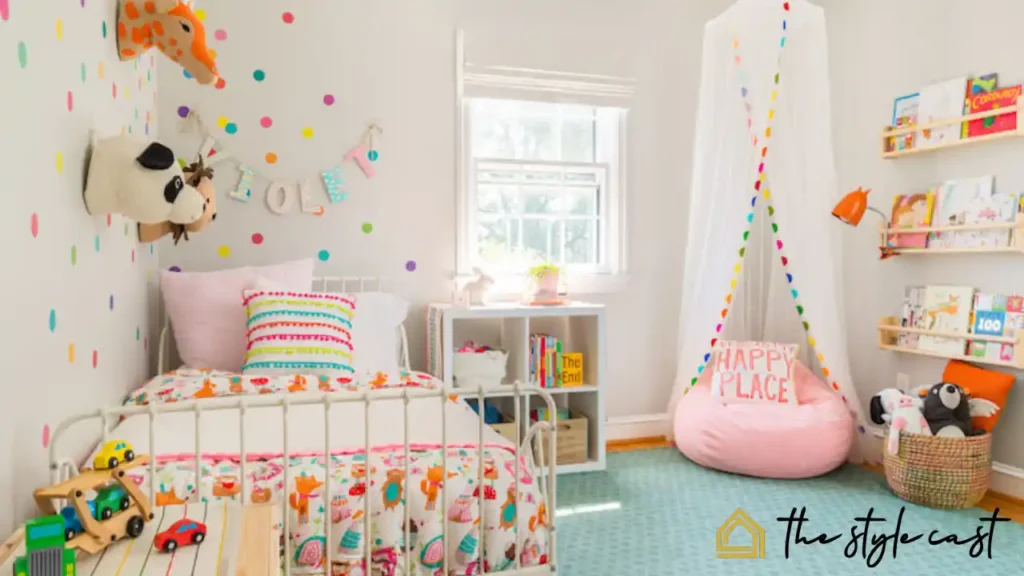
I have witnessed children’s bedrooms when at times selling a home. They have been almost like this lost and skipped spot, where preparation could have been the last offer. But in fact, if one is staging the living room and kitchen, after all, the bedroom were children sleep and play should be overlooked in terms of proper staging. Staging kids’ rooms would completely leisure-collect a hazy enough atmosphere encouraging their potential buyers to conceive their family life in the house. This effectively is a rare investment to march towards into the homescape in the pool of worths before launch.
Understanding the Importance of Children's Room Staging
The children’s room staging idea goes much further than neatening toys and making a bed. It’s about showcasing possibilities to go after for potential buyers. When families view houses, they are taking more than a look at square footage of closet space; they’re visualizing their kids growing up in those rooms, forming memories, and feeling safe and cozy.
Professional advice on staging a children’s room would emphasize the importance of creating a neutral but warm and inviting space, which allows buyers to conceptualize their personal family needs and taste. Teaching children how to use symbols makes grammar issues, yet you need to be crystal clear about the meanings of specific words within the set of symbols you are introducing. In the English language, there are five noun markers: articles, pronouns, adjectives, and noun markers – determiners.
Articles function as general noun markers, which ensure that a noun or some other element is named, while pronouns refer back to the antecedent noun earlier in the statement. Adjectives describe nouns. In other words, 12 large indicates that 12 is associated with ‘large’, which is an adjective modifying ‘apples’. Noun markers, or determiners, are elements that code a noun in relation to the listener in ways like quantification or reference. They are examples of noun modifiers. Unfortunately, some believe that the use of the articles makes the language sound awkward because there are so many nouns that don’t have noun markers in English-speaking countries. Some other languages use fewer markers, so they find the English article system unfamiliar.
The Foundation: Decluttering and Depersonalizing
When preparing the children’s room for staging, the predominant aspect of staging the room would be throwing out the clutter. In the child’s room, there may be possessions which are too many and these include toys, clothes, books, crayons, and markers among others. The first thing one needs to do when cleaning up children’s rooms is pick up about seventy five percent of the things in the room. DN t panic this is not very radical since you are not dealing with your child’s room anymore it is a show room.
Get rid of litter: teddy bears scattered on the bed, olastic figurines crammed into overflowing toy bins, books and knick-knacks choked shelving space. Place away, filling boxes with these types of items, and leave only a few appropriate items for that age in order to boost the children’s room staging. The items that remain at this stage are recommended to be useful and inviting without repetition. During the children’s bedroom décor process, all sorts of personal items such as family pictures, drawings of children’s names, school crafts, or awards, which you treasure so much, need to upholster children’s rooms.
These things, while very important for the family and difficult to get rid of, hamper buyers from imagining their children’s belongings in the room. Substituting family pictures for neutral and impersonal creations in terms of artwork or even – quite naked walls allowing for the appreciation of the architecture of the room and the positive effects of day lighting. A major part of children’s room staging involves attention to closets during the clearing-up process. Any customer is going to look into a closet, and if it is full to the brim, will conclude that there is not enough storage. Put away clothes that are off-season, reduce the number of clothes hung on rods to no more than three, and arrange the rest in a way that is similar to that of a boutique shop, usually by color. This attention to little things can go a long way in influencing buyers on the storage adequacy of a house.
Creating a Neutral Color Palette That Still Feels Warm
Among the best ways for children’s room staging is selecting an appropriate color scheme to work with that is not too drab or too cool. It is vital to note that neutral colors are neither dull nor hospital-serenaded. Warm grey, warm white, cream, and very light grey colors are some of the ways to achieve a stylish look that will not deter a buyer but will also provide warmth for children. Avoid primary colors, themed wallpapers, and bright accent walls, and chalk this up as one of the children’s room staging ideas that will require repaints.
One of the cheapest and easiest ways to give any place a new look is through paint, and neutral colors have a way of making any room look bigger, fresher, and more updated. As an alternative to paints that are cool grays and bright whites, prefer those with warmer undertones as they may appear clinical in a children’s area. When you are staging a children’s room in neutral tones, it is fundamental to layer the same colors but in different shades so that there is an illusion of depth and it looks more appealing.
For instance, you could use cream walls accompanied by some beige curtains that are only a few shades darker and add some soft gray pillows, or perhaps a small area gray rug. Such a monochrome scheme is simple yet elegant as it gives several layers for the eyes to enjoy without making the room too plain and boring. Another aspect that receives great attention when considering children’s room staging that use neutral colors is texture. As there is no room for many color options, a thick woven jumper or loose woolen armchair or some window treatments or materials can be used to add warmth in the room. Such would be for example, wool pillows, chenille blankets, or sheer curtains. These details encourage potential buyers to envision their kids enjoying their new ‘home’.
Furniture Arrangement and Space Optimization
It is imperative to remember that furniture areas in a child’s room must always have a strategic purpose and placement, and this applies to the art of children’s room staging. The main objective is to highlight the spaciousness of the room and its functionalities, but with clear transitions and abilities to accommodate several activities in the place. You would at the outset, take out all the huge furniture as well as all the non-essential furniture that cannot be accommodated without making the room look crowded.
Simplifying the furniture arrangements in most kids’ bedrooms is usually a good idea when staging them. It is the case for containing only a basic number of units necessary: the bed, a storage chest, possibly a small table or lounge chair, if there is such an option. There needs to be any furniture proportionate to its placement in the room, if not, it will always be problematic, for instance, a kid’s bedroom which is quite small and contains a queen-size bed looks so congested compared to a normal twin or full size one where a person can manage to move around safely and fit other things easily.
To use furniture placement tips when decorating a children’s bedroom, the bed should be placed as focal point and at the longest wall or in case the room’s layout allows, at the center of the window. There should be little space – at least a couple of feet (or 0.5 m) – on one side of the bed to allow for the folding out of a sheet or quilting the bed and never be tempted to attach all the furniture to the walls as such action will tend to diminish the perception that the room is smaller than it is. Eliminate the discomfort by placing the furniture slightly away from all sides and not ridding it from the effort of pulling it as there would be inert spaces for visitors inside the room when they are supposed to walk into it. When laid out furniture in children’s room – amongst these factors is traffic flow, a furniture arrangement plan or room design plan should be put into place.
Fflander, make sure that the path from the entrance into the room is not blocked, so that a buyer can easily move around the interior and see everything. If the furniture layout does not flow well or if there are areas that cannot be utilized, rearrange the furniture so spaces can be navigated and the space available in the room maximized.
Bedding and Textile Choices for Universal Appeal
The bed visually constitutes the centerpiece of any bedroom and therefore also makes bedding selection for children’s room staging very important. High-quality neutral bedding in literature suggests using soft materials that are not typically associated with children or a specific theme such as cotton or flax. Single colored or simple designs are all that is necessary—some stripes, a bit of geometric designs or some simple flowers out of pictures and pestle colors. White or off-white colored bedding lends an image of neatness reminiscent of hotel rooms, which is liked by most buyers but may often appear too clinical for a room of children.
So try to warm this up a little by means of layers: a white duvet cover be asymmetrically placed on top of beige or light gray sheets with a soft toned blanket on top for a touch of texture. This method satisfies the demands of neutral children’s room decor through application of various techniques on how effectively children’s bedrooms should be staged and neat while acquiring comfort in an attractive way. Pillows are an appropriate means by which one can express character in children’s room staging without excessive alteration of the area.
There is no precise guideline about the number of pillows every bed should have, there are only two main ones used for sleeping which should be correctly situated on top of the bed. You can add one or two throw pillows to another kind. One should not go overboard with the pillows’ decorative aspect as it may make the bed appear less utilitarian. The colors of the window treatment should also match those of the bedding as well as the neutral theme of the décor. Simple and straightforward curtains made out of light fabrics are good because they are transparent enough to allow daylight in, as well as maintaining privacy. Thick, Dark curtains or complex decorations with valance and tiebacks should not be used in a child’s room because these curtains are outdated and scary to children. Children’s room staging is about making the most use of daylight and ensuring that both space and warmth are enhanced.
Lighting Strategies to Enhance Warmth and Function
With the aim of showcasing a children’s room staging, good lighting is critical and proper lighting is the way to go since it can completely transform the way buyers view the space. This is because well-lit rooms give the impression of being bigger and cleaner, and most importantly inviting whereas poorly lit rooms make even the entreme situation look small, intimidating and unwelcoming.
Mix and match light scenes such as ambient, task and accent light to set a cozy, functionality- based room that accentuates the greatest parts of the space. The first in the elementary staging tips for the kids’ room is the using the opportunity of external lighting illumination. Make sure the glass surfaces of the windows are sparkling clean; get rid of any drawn, blackout or thick curtain insisting that has been obstructing the outside.
All curtains and blinds should be opened during tours to let in maximum natural lighting that attracts all buyers regardless of the individuals’ personal tastes, but also significantly helps to make rooms look great in pictures. For children’s room staging techniques, the logically mandatory overhead lighting must be in place for ambient purity illumination. In the cases where there is one that is old, outdated, and damaged or in kiddy themes, a suitable contemporary replacement that gives to the light is enough and is not boring is required.
Ceiling flush mount lighting or a ceiling flush mount lighting fixture in an unobtrusive finish does the trick in most of the cases with kid’s room functions, where simple yet effective lighting may be easily appreciated by the mass. Incorporating table lamps or standing lamps in children’s room staging brings coziness and functionality. Place a lamp on top of the dresser or bedside table, within reach for reading or completion of assignments, and preferably a plain lamp with a soft color shade to match the rest of the room décor.
For instance, imagine lamps with warmth start illuminating a beautiful room for an evening showing, making it easily imaginable for the prospective buyers out there as a perfect room for their kids to relax and unwind.
Strategic Use of Accessories and Decorative Elements
Accessories play a subtle role in staging a child’s room; too many will appear cluttered, too few can make the space feel cold and unlived-in. The trick is to select a careful, mix of neutral, age-appropriate accessories that suggest both function and comfort, without obviously taking over the space or dictating the style to potential buyers. In applying kids’ bedroom staging tips, choose accessories that also serve a nominal purpose while being visually mesmerizing.
A decorative basket could be used to hold a few selected books or toys, a simple wall clock allows the time to be read and fills dead wall space, while a green plant or a vase with fresh flowers, without being overly personal, can bring some life into the room. Every item must earn its place in the room itself towards the elegance of the space. Books are very useful tools for children’s room staging, as they signify learning, comfort, and age-appropriateness of the space. Nevertheless, don’t overload the shelves with books.
Instead, a few neat neutral-covered children’s books will sit well on a shelf or maybe next to a picture on a nightstand; perhaps, a few flat plus one or two forward-facing displays, the latter being useful for adding an element of visual interest. Choose books sans overly childish themes or more specific themes, that may not appeal to every buyer. Artwork once again provides an opportunity for children’s room staging by incorporating warmth without getting personal or too specific.
Basic artwork with, say, animals juxtaposed with nature scenes, geometric patterns, or famous inspiring statements in neutral frames will sit very comfortably. The artwork should, however, be hanging at a height that neither obstructs the view nor places it above the child’s own sightline. Constrain the wall decorations to one or two big pieces so as not to make the space look overwhelming.
Age-Appropriate Staging Considerations
Different age group require different approach for children’s room staging. However, the kind of staging that needs to be done in a ideally lofted room for a newborn is quite diverse from the idea that is expected towards a teenager’s room. Therefore; your staging strategy should effectively address whom the most promising buyer would be for the home and the area in the background.
For nurseries and toddler rooms, children’s bedroom staging tips seem to focus more on safety, cleanliness, and sweetness but not overtly cute. A simple crib or toddler bed with a neutral bedding, a comfortable glider or rocking chair, along with a few, tastefully chosen accessories, should finish the compromise between two feels into one quiet air appealed to pursuants or family with younger kids. Avoid anything screaming “baby,” like mobiles, diaper stackers, fairy tale rhymes’ alla. These are too specific and too old-fashioned.
This time targeting teenagers, a sophisticated strategy can be placed between the realms of children’s and adults’ staging. Such staging treatments must draw attention to the twin capacities of being a sleeping area and a peaceful sanctuary for the children. A beanbag chair or little loveseat would surely work toward this homey, comfortable seating ideal if the room might permit it. Just go through some real desk areas for doing of wholesome studies, popping more art accessories into this neutral color scheme, all at the discretion of the parents.
Closet and Storage Solutions
One of the key factors that influences the way a bedroom is perceived in terms of its beauty and functionality is the storage area. For this reason, adult children’s room’s closet organization is critical even in children’s room staging. For example, a neat, well-organized, crowded room, with a closet can be taken to mean that a child can keep all his her possessions in the room without some of the items crossing over to other rooms in the home.
Utterly, buyers shall open the closet hence many view it as imperative to pay as much close attention to the particular area as in the rest of the area being as it is visible. When resuming the tips on children’s room staging, the most effective starting point is an empty unfilled room. If painting is necessary, after all removable items are taken out, broken or bent shelves or rods must be mended, and the final step is cleaning and lighting the closet.
In that case, if there is no integrated lighting in the closet, add a battery-powered motion sensor light even though this seemingly insignificant detail makes a great deal of difference for the prospective buyers. Restock your closet following the rule of thirds when designing children’s bedroom area; closet should be filled to about one-third of the available hanging space, one-third of the shelf space, and one-third of the floor space if applicable.
Do this to give the illusion of having ample storage while still portraying the space as usable and functional. Additionally, sort the other items according to their colors to help create a boutique look. The storage institution in other rooms of the house must also correspond to the children’s room staging. In fact, this will include a dresser with most of its drawers empty (eliminate at least 50% of items), the book shelf with significant spaces instead of filled in items, half-filled bins or baskets without any of them overflowing, etc. in order to show that there is sufficient storage space and it is well organized.
Flooring Considerations and Area Rug Selection
Flooring has a significant impact on what a child observes when staging a bedroom. So if you do happen to change them, it’s based on general best practice for staging. Take good care of existing flooring, cleaning the rugs well and most importantly repair them if they have blemishes. Sometimes you may find the carpet stained or worn enough that it may need professional cleaning.
Hardwood and laminate floors certainly need cleaning and most importantly, polishing. A look for quality and frequently this will get your message across when displaying features. Area rugs serve different functions in the children’s room staging. That partly defines areas within a room, such as the play area or reading nook; provide warmth and texture to space. Furthermore, they protect the floor during viewings and conceal minor imperfections in the flooring. Thus, any neutral-colored rugs with subtle patterns and textures, in harmony with the overall staging, would fill that spot.
Size counts in choosing an area rug when framing tips for kids’ rooms. A rug that is too small can break up a room and hinder it, while a rug that is correctly sized mellows out the separate pieces in a room and can make it look larger. In most cases, an area rug should extend at the very least twelve to eighteen inches beyond the bed or, if for that matter, the play area or balanced with a desk, be large enough to complement the furniture with some border at either edge.
The feel of your rug, whether in texture or in material, should be soft and sensual underfoot, since those feelings drive awareness from the warmth and comfort among buyers. Natural fiber rugs, like jute or sisal, could pull the room into a more organic feel. However, a more plush wool-like feel would give comfortful wishes to a family with small children: soft synthetic materials. Make sure the rug is absolutely clean and free from stains or odors, since buyers will pick up on those things.
Creating Functional Zones in Larger Rooms
While children’s room staging, one of the most effective ideas is to break up the space into functionally distinct zones to highlight the fact that the room is amenable to many different activities from sleeping. This way, the buyers can see that the room is worth more and more appealing to families of children of different ages and diversifying interests.
Sleeping is probably the most straightforward zone to create in large-room child’s bedrooms while staging. Place the bed at the center of the room and flank it with nightstands or small-sized storage units, if there is enough space. In this area, sleep is implicated when it is time (or the moonlit night), while this very part does not dominate the entire room.
Why don’t you consider creating a study zone or a homework site as a part of your children’s room staging, especially if the room could be for school-going children? Anything a child would require while doing homework, including a table and chairs, would be set up there with suitable lighting and few writing tools. It helps in preserving the mood of the setup as a healthy environment for their children to work in.
You’re supposed to position this area close enough to the window so that it could get maximum daylight. A reading area or quiet zone provides an additional structure to your children’s room staging. It may consist of a cozy floor cushion or a lounging chair [for the child], a little bookshelf plus a pedestal or table light. You should leave its particular identity.
The setup shows one, the room is spread with multiple activities, and it can be used as a shelter at any time one needs one. This will undoubtedly work wonders for those buyers who have children and hence require little or no space to work comfortably, while also looking for children’s little creative corners.
The Role of Scent in Children's Room Staging
When talking about children’s room staging many concentrate on the visual aspect, however scent is another component which will silently and positively enhance an overall ambiance, persuading the buyers who enter. You want to make sure that the room is devoid of any common children smells such as musty closets or dirty clothes which have been around for a while ready to be washed after napping and after meals accidents or spills and remained unwashed. The best approach to the scent-related tips on how to stage a kid’s room is to make sure that thorough cleaning is carried out on everything within the room.
All sheets, drapes, or anything containing fabrics should be washed in very mildly fragrant detergents or unscented detergents. Clean the carpets and joineries such as shelves of any dust, and also within the closets, and on surfaces. Other specific smells should be eliminated using solutions suited to the type of material in question i.e. biohazardous material wastes and enzyme based or baking soda based cleaning agents.
Children’s room staging ideas should also refrain from using air fresheners with too strong a smell as well as plug-ins filled with sweet scents or even most candles that burn with heavy mixtures of perfume oils. In fact, there are some buyers who find the use of artificial scents offensive and worry that the odors being masked are much worse.
Such people may resort to the use of light-scented natural ways such as; placing coffee beans in a bowl, adding vanilla extract to light bulbs before switching on the lights, or placing a sachet with dried lavender within the corner of drawers. The optimal means of addressing odor in the context of children’s room staging is simply bringing in the outside air. Keep the windows open prior to the showing to air out the room, and ensure that as soon as possible you ventilate the entire house.
On favorable days, favorable weather conditions, allow the windows to stay slightly open for a few more hours to help promote the sense of freshly cleaned spaces and contact with nature. Such an holistic approach to fragrance manages to be both tolerable by all and very clean looking.
Seasonal Staging Considerations
The season at which you need to put your house on the market has a link to the issue of children’s room staging. This is because each change in season provides a platform to enhance room features and capture different emotional triggers in buyers thereby necessitating one to tune one’s staging techniques to appropriate seasons. s children and trying to relate them to buyers.
For instance, in planning the children’s room, one should focus on a bright and sunny image which includes lots of space outside. Also, it is a good idea to use bedding that is made of cotton or linen mainly due to the sunshine, and plenty of outdoor elements. During these seasons, people are fond of a comfortable home with the sun shining bright as it supports their natural disposition to this fact.
Arranging a fall-winter children’s room sets the tone for a potential buyer’s need to find warmth in nesting. Have beds laid with covers especially in warm, neutral colored throws or quilts, check all bulbs are working to out do the short days and, added texture could be of heavy curtains or additional carpets. It is intended to build a place that protects children from the winter weather. Deciding on staging the holiday season is especially challenging where children’s rooms are concerned.
While one can get away with some decorations in the living room or the kitchen, typically, children’s room staging remains similar throughout the year. Should you decorate with holiday decorations, make sure they are simple, non-sectarian and can be put away. This helps in not only providing an opportunity to place decorations such as wreaths or pictures with winter scenery (instead of Santa or Christmas lights), but also does not leave out the multi-ethnic homebuyers.
Budget-Friendly Children's Room Staging Ideas
It is not imperative to spend a lot of money on children’s room staging because it can be accomplished quite effectively without a high additional cost for special designs. Most important changes in this respect do not cost a lot of money and instead take more time, energy and strategic consideration. Knowing what kinds of enhancements are most beneficial will enable you to stage your children’s rooms more effectively without spending a lot of money. The cheapest strategy for staging a child’s bedroom is to ensure cleaning up is done properly together with decluttering – this has no cost except labor.
Disposing extra sheets of beds removing extra furniture, toys, personal concerns and cleaning deeply all the surfaces gives out a fresh and classy look.’ At this point this activity should be undertaken before one spends any further quality of life which includes buying of items such as candies for children or extra chairs. Applying paint is one of the easiest and least expensive ways to improve children’s room staging. Painting the walls with neutral colors and brightening up the place will also help cover the colored, themed, and old scuffed walls decorated earlier. Considering that every gallon of paint is about thirty to forty dollars and one up to two gallons are more than enough for a child’s bedroom, this is a very cost effective method of enhancing any other decorations one has exhibited. Shopping from your home also gives plenty of ideas for free children’s room staging.
Fitting a guest bed with neutral colors beddings, gathering a window treatment from a different room, transferring a side lamp from a sitting room, or bringing some accessories from their part of the house to the children’s room staging for some while, for the purpose of staging, are just some and many such fixtures that would look different and nice at the same time, in usage, can be used rather than becoming waste. This kind of thinking (or strategy) gives scope for constructing a totally different feel without putting any additional expense on buying new things, which means that the cost of staging remains low.
Look for inexpensive ways to acquire items necessary to implement children’s room staging tips, such as a trip to a thrift store, a discount store, or the internet. Bare essentials such as a neutral throw pillow, several sheer curtains, and a bedding set with the least print are well within reach from these places since they are considered penny items. There is no need to spend extra money on expensive options for these staging items, because they are used only during the sale.
Common Children's Room Staging Mistakes to Avoid
It is worth noting that as important as the right children’s room staging strategies are, it is also important to note what mistakes are to be avoided. Certain mistakes are prevalent even amongst experienced individuals and they increase inefficiency as they make the rooms unattractive to potential buyers or create unnecessary fears and impediments to selling the house. There are certain obstacles in staging that must be avoided in order to make sure that the effects that are desired after the staging have been done are positive. It is very common for the toddler’s room to be too transformed during the staging.
Child-memorabilia such as photographs, name stickers, awards collected for sport activities and crafts, prevent parents looking to buy from fantasizing about their children in the room. Although the children and their achievements and personalities are endearing, during the sale period it is best to box these up so that children’s little frames and visions for the room can be utilized in the room. One more error worth mentioning in children’s room staging is over-staging or over-decorating. Some sellers, in their zeal to beautify the space, tend to add a bunch of accessories and pillows or too many other décor items.
As a result of this, the room may give the impression of being too cluttered and confined than appealing and spacious. This is why stage well, but stick to the essentials – each piece should have a reason for being where it is in the room and should not crowd the space. Even best children’s bedroom staging tips can be negated by simply skipping on proper upkeep and repairs. scuffed up walls, cracked closet doors, damaged window treatments, burnt out or broken light fixtures, worn out carpet or flooring – these are some of the telltale signs of poor upkeep of a house and a buyer will most likely worry about other more serious problems lurking elsewhere.
No damage, however small, should be seen by a buyer in that room before it is staged and shown. Children’s room staging must consider the strategic interests of target market and in this regard, ignoring those interests is a mistake. A house in the suburbs close to good schools is expected to have bedrooms for children of different age groups staged creatively, whereas a house in an upmarket estate may have the children’s rooms re-staged as simple flex areas or even office/guest rooms.
Since the area or target market will ultimately dictate the look, feel and purpose of the interior spaces it is important to know the audience being served.
Professional Staging vs. DIY: Making the Right Choice
Before deciding if the services of professional stagers will be reuired or the children’s room staging ideas can be implemented personally, couple in several factors like the available budget, deadline, the level of confidence in design ability, and real estate market of the area. It is a two-pronged sword as both methods can bear fruits when applied in the right manner.
Thus, it is important to note the strengths of each one before deciding to suggest an appropriate approach. Unlike you, professional stagers are knowledgeable, impartial and cut out for any task especially when it comes to children’s bedroom staging tips. They are aware of the latest designs and the most effective designs that work for buyers in a sort span. Professional stagers do include furniture and comb accessories for the decorator’s use which comes in handy where children’s rooms do not have adequate pieces that can be used to stage the rooms or homeowners have already vacated the house.
The expense related to professional staging is mainly influenced by the geographic location, the number of rooms to be staged as well as the length of time the staging will be required. In case of children’s bedrooms, staging is likely to be charged per room anywhere between few hundreds to over a thousand dollars. Money towards this is a worthy sacrifice since houses sell faster or even at higher prices especially in a market where how a house is looked at influences largely whether house is purchase or not.
Opting to perform children’s room staging on your own, not only saves on costs opened, but also provides you the flexibility of working on your own pace as well as ensuring that you are not forced dummy deadlines. If you have an eye for design checks, know how to stager, and can devote time to the work, self-stage should yield very good results which can out evidence and self-explanatory logic. Homeowners are able to stage their own children’s bedrooms especially when given critical structures and picture don’t’s.
Technology Integration in Modern Children's Room Staging
Attitudes and preferences of modern home buyers have shifted in favor of such technological advances that are omnipresent throughout their residential units, even straying as far as the children’s room. Therefore, the children’s room must maintain all of its appeal but most importantly monotonously simple neat but adorned with some technology as long as it does not disturb much the aesthetic value of the room.
One of the quickest children’s bedroom development ridler engaging those of technology is smart lighting. This smart light bulbs adds in existing light fixtures and would give buyers an incentive to think of easy-to-dim modes of lights for bedtimes or change in color temperatures when doing assignments and when relaxing.
As well as adjusting the temperature of the light to a natural warm white colour that enhances the space during showings, helps hide the fact that there is such technology in the room. In today’s age, charging devices wirelessly is commonplace thanks to portable gadgets. It makes sense to have unobtrusive charging plates on top of a drawer unit or a desk in the children room if there is one. This gives an impression that the room is modern in terms of its structures and furnishings and does not require any substantial enhancements or replacements.
For ease of presentation, choose charging pads that are to be placed in neutral colors, basic shapes and sleek designs to match to be compatible with the rest of the house’s interiors. It is unlikely that USB-enabled sockets will be added during stages, however, if the children’s room is equipped with USB-enable sockets, there is no harm in mentioning them. The sockets impart the impression that the house has everything a modern family would require and make it unnecessary to use any additional plugs or boxes.
In cases where new socket installations are impossible, there is always the possibility of using a good power strip with USB ports hidden behind a bedside table or a student desk to achieve the same intent. When presenting children’s room, try not to overdo the inclusion of technology as this can easily date or make the space feel sterile.
You want to show that the space can serve the current family structure needs but retain the classic, welcoming appeal that encourages the broadest potential audience of home buyers. Staging should be supported or enhanced by technology, although technological devices should not be at the forefront.
Photography Considerations for Staged Children's Rooms
Each child’s room can be staged to perfection, but if the photographs of the property don’t show the space in a good way, it won’t bring any buyers in. In a kind of way, knowing in what manner the children’s room staging will be photographed allows to bring decisions using the facts available, namely how it will look in the photographs, which is what buyers will pay attention to first when looking at your property. Without professional real estate pictures, it can be difficult to sell the amazing children’s bedroom staging that has been prepared.
On the other hand, when it comes to photographing interior spaces, professional photographers know how to use wide lenses to capture the whole room, use any available light to make the space look bright and warm, and take keenly cropped images that show off the main elements of a room. Moreover, paying for photography that is performed by a professional sector usually brings great gains in terms of the number of buyers and the sold time. If you are executing any interior redesigning project in a children’s bedroom with the aim of making the focus of photography, consider where the camera will be positioned in the room.
Cameras often shoot from the entry point to cover the entire room, capture furniture and room structure from corner to corner or focus on features such as window stoops and inbuilt cabinets. Make sure you follow through with the staging so that it’s appealing from all angles including the least apparent one when you step in. Every element of clutter that may otherwise be left on the floor when executing children’s room staging ideas must be thought about when the target is photography. Because with the camera every detail is captured, and that includes such small things you would not even think of when enhancing the room in person.
Depopulate all the items, clean the area thoroughly and focus on such details as wires, switches and air-vents that can be noticed in photo but unobserved in normal room inspection. Light optimizes the children’s room staging presentation in the photos. Plan the photo sessions at such a time that there is enough sunlight which is usually in the mid-morning or early afternoon when the sun is not too scorching hot. Put on every single light such as the one above the head, as well as table and floor lamps, so that the space is warm and inviting. More often than not, a lot of professional photographers use lighting equipment as well, however, the starting photographs from a well-lit room are good.
Virtual Staging Considerations for Children's Rooms
Another development that has taken place in the real estate industry could be observed in children’s room staging practices, and pertains to virtual staging. Virtual staging is the placing of digitally rendered furniture and decorations into empty rooms for the taking of photos as a way of imagining what spaces will look like once furnished and decorated. For changing vacant homes’ children’s bedrooms, rental furniture would bear an extremely high cost, hence virtual staging is a welcome strategy.
This may be hard to accomplish otherwise since the typical fee in most cases is a few hundred dollars, and the process can bring staged versions of the same room in various versions for different buyer demographics; maybe the same room is shown as part of a nursery in one and decorating it for a tween bedroom in another. Nonetheless, it is important to note that children’s room staging virtual images have to be clearly labelled as such for potential clients in the interest of fair business practice, as well as legal requirements that apply in most areas.
Any home showing with virtually staged pictures has to have such information written on those pictures for the clarity of the buyers, otherwise pictures of the room without furniture have to be taken. This way, the buyers are safe, contrary to the common practice where actual buyers are manipulated. Nevertheless, the standard of virtual staging revolves around a wide range and hence it is important to go for a reliable provider. Indeed, the listing images can work against your listing instead of helping you, since unprofessional photos done with poor virtual staging may include such flights of fancy as putting furniture above the floor, awkward light, or clearly superimposed furniture.
Choose the virtual staging services that incorporate visualization of the proper sized furniture, correct shadows and realistic colors. Some vendors combine the presence and absence of children’s room staging, presenting it for actual visits and also providing prepared images with or without it. They perform staging inside the house during a viewing to the guests, but sell the listing in one way many different rooms can be made of the space actually on offer to potential purchasers. But make sure that you specifically mention out all the virtual realities of impressions so as not to mislead your customers in any way.
Final Touches and Pre-Showing Preparations
The truth is that even successful children’s room staging does not necessarily stop the buyer from thinking about what else can be done with the room. These additional activities are quick and easy to carry out but contribute greatly to the buyer’s impression at the first sight and so are important components of the maintenance of the dressing throughout the selling process. Consider creating a To-do List For children’s bedrooms for specific aspects of children’s bedroom staging already practiced.
For instance, this list may require the following activities: all curtains and blinds should be opened, all lights switched on, the bed perfectly made with all the pillows aligned, all the Out-of-the-room objects should be placed back, the room should be vacuumed or swept, the closet should be organized and all the doors should be closed, all the accessories should be in place and smell test should be performed. Children’s room staging typically disregards the importance of temperature control, but for buyers inspecting a house, it is an important factor. Make sure that the room is, in fact, not chilled or warm before customers come to view the house.
Perhaps, it’s time to adjust the vents if needed, toss in a small heater or fan, switch some zones on and off, or turn the recovering system up or down in all the rooms. Firstly, if children are still inhabiting the space prior to the sale of the house, create a fast setting up framework. Prepare proper bedding and decorations close by to administer in place prior to switch- replacing impromptu bedding, encourage the creation of a ‘show ready’ bucket for toys and paraphernalia, and enhance efficiency by repetition of activities associated to supposed work.
Organised families can get a child occupied bedroom makeover in fifteen to twenty minutes. Look into the possibility of having the children’s room staging come into play in the preparation of the room. The cleanliness of the area extending to the bedroom corridor must also be kept minimal and neat. Potential buyers judge your merchant by its events as a whole, hence decorating the corners leading to the children’s rooms helps in children’s room staging as well.
Measuring Success: Knowing When Your Children's Room Staging Works
Proper children’s room staging will be highly effective if it produces results in terms of interest shown by purchased clients, showing feedback, and lastly, in your home’s sale pattern or price. Knowing how one can assess the effectiveness of his/her staging allows for changes if it becomes necessary and reassures that one is being productive in spending time and resources. Kindly take note of the showing notes and more so if any is about the children’s bedrooms as this is very important too.
For example, if most buyers leave comments about how spacious or neutral or clean the bedrooms are, then this is one of the children’s bedroom staging tips working. Feedback about rooms always regarding aspects like too tight spaces, a lot of elements use, conversion mention over and over again means changes in the staging are needed. Online engagement metrics are another measure of how successful a home staging has been conducted. Track the number of views a single listing receives, the average time spent a potential buyer looks at individual photos of children’s rooms, and which of the rooms seem to be more attractive based on shops’ save/ inquired list.
When the pictures of children’s bedrooms register disproportionate engagement in terms of clicks, it implies that the children’s room staging ideas are working towards the audience. Check the showing to offer conversion rate in your local market and compare it with your figures. If you have lots of people coming in for showings but very few offer results, then you might have some flaws in your staging. If you are, on the other hand, able to translate a lot of viewings into good offers, it means your skills in children’s room staging are effective.
Your real estate agent may have comparison data to provide market interpretation of these statistics for you. When looking at the goals of staging, what really matters is that you manage to sell the house in the time you want to and for the price that you have justified for it. Houses containing professionally staged or well-styled children’s areas market more quickly and achieve higher prices than the houses containing poorly styled children’s corners or houses without styling the children’s corners at all, justifying most sellers in spending the extra money on properly styling a children’s room. Why is children’s room staging considered lasting?
Conclusion: Creating Irresistible Children's Spaces Through Strategic Staging
Staging the kids’ room is probably the most effective tool you can use for the sparkling price of your home. You will only have to start from scratch to inject personality and warmth into bare spaces, thus providing ample incentive for other parents to see their family growing in your home. All the children’s room staging ideas, children bedroom staging tips, and techniques shared in this e-guide will enable anyone to create living spaces considered neutral and warm at the same time but unforgettable in a real estate market notoriously fantastic condition due to their familial aura.
A successful staging of a child’s room really involves a delicate balance between neutral and warmth, ability to show its potential to the buyers, and allow them to project their own vision into it. Be it a nursery for a mum-to-be, the child room for growing families, or the teen room where older children are involved, the focus will have to be on thorough decluttering, a happy childhood colour of no significance, maximizing of space and light, and creation of separate but functionally powerful areas, showing your buyers that the room can be transformed into any need. Investment in good staging of children’s rooms, whether through professional or the DIY efforts, always pays back with swifter sales, a higher final price, and lessened time on the market.
As you prepare your children’s bedrooms for presentation to potential buyers, think in terms of appealing to the widest potential buyer audience, making for spaces that feel like home without being so very particularly tied to your specific family needs and preferences. By paying attention to the suggestions laid out in this guide, your staged children’s rooms become strong selling aspects for increasing the general appeal of your home, rallying around to meet your selling targets, and also showing the full potential of these valuable spaces within your home.